ServicesCeramic Coating
Ceramic Coating in El Dorado Hills
We decontaminate and correct your paint, then hand-apply a ceramic coating that bonds to the clear coat. Water beads off, dirt lets go with a gentle wash, and the gloss lasts. After pickup we check back and show you how to keep it working.
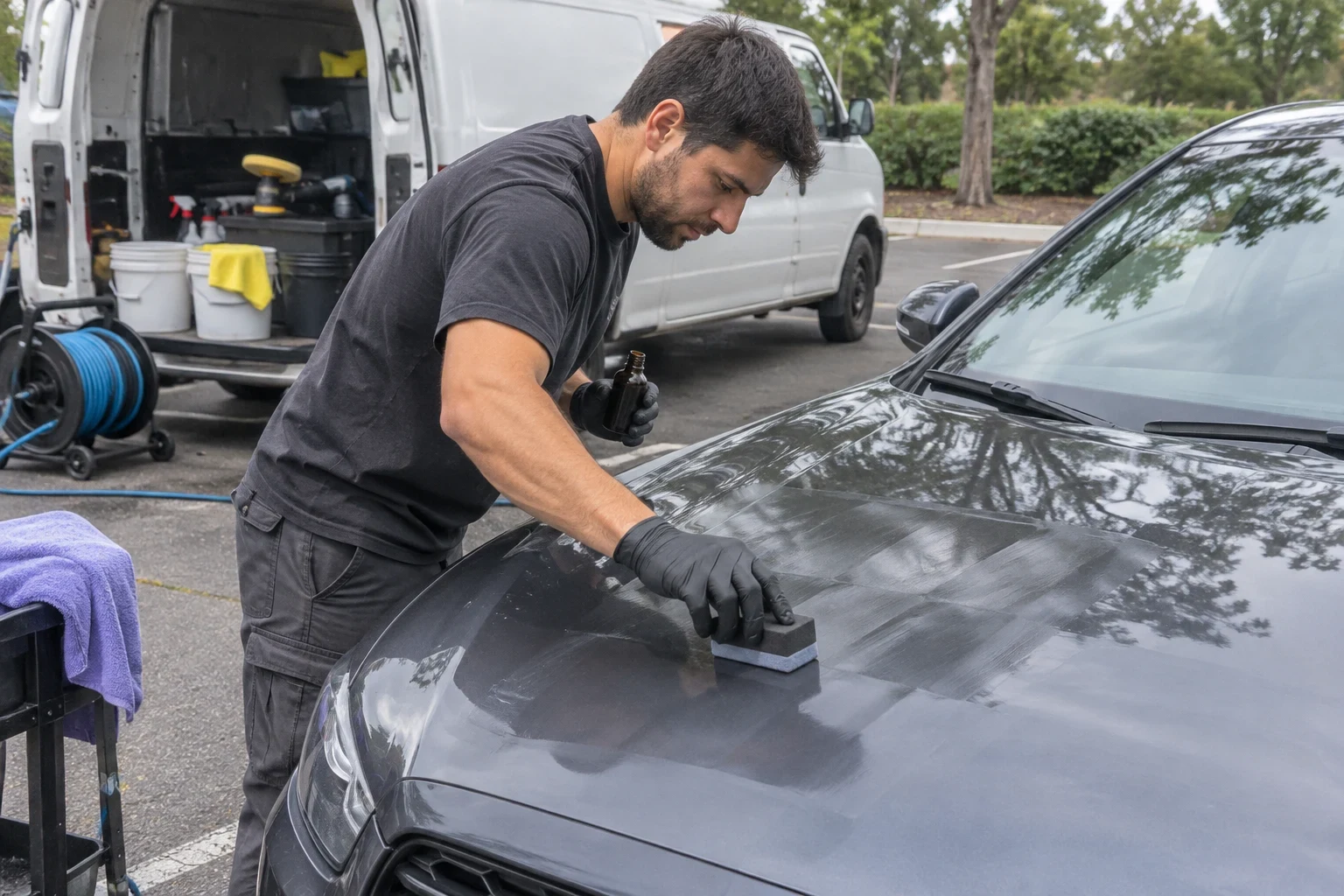
How a silica coating protects paint, and where it stops
We hand-apply a silica-based (SiO2) formula over your clear coat, working one panel at a time. Over the cure, the coating cross-links into a hard, very thin shell that bonds to the paint surface. The result is slick and hydrophobic: rain beads up and runs off, road film struggles to grip, and a wash takes less scrubbing. That shell also slows UV oxidation and takes the first hit from bird droppings and tree sap, so the clear coat underneath stays intact longer.
Thickness is measured in microns, which means there is no real cushion to soak up an impact. Gravel kicked up on the freeway and deliberate scratches will still reach the paint. Paint protection film is made to absorb that kind of hit. A common setup is clear bra across the front end with the entire car coated afterward, film and all.
Any swirl or speck left on the paint gets sealed under the coating, so the prep work sets how the car looks for years. Over 6 years in business, the step we've found matters most comes after the install: once the coating has cured, we reach back out and go over how to care for it.
What the coating service includes
- Wash and decontamination
- A foam pre-wash and two-bucket hand wash come first. An iron remover dissolves embedded brake dust, and a clay bar lifts out stuck-on contamination that washing leaves behind. Coating over that grit would seal it in.
- Paint correction
- We machine-polish to remove swirl marks, light scratches and oxidation. Paint depth readings come first, so we know how much clear coat there is to work with. We agree on the level of correction with you before we start.
- Panel wipe
- Polishes leave oils on the surface that keep a coating from adhering properly. An alcohol-based panel wipe strips them so the coating sits directly on clean clear coat.
- Hand application and leveling
- We apply the coating one small section at a time, let it flash, then level it with clean microfiber. Every panel is checked under shop lighting for high spots before it sets, because a missed high spot is hard to remove once cured.
- Wheels, glass and trim
- We can also coat wheel faces, exterior glass and plastic trim with products made for those surfaces. Coated wheels shed brake dust far more easily.
- Care briefing and check-back
- You leave with clear care steps for the first weeks and for the long run. Then we follow up to see how the coating is behaving.
Signs your car is ready for a ceramic coating
You just took delivery
New paint needs the least correction, so this is the best time to coat. Dealer prep often leaves light swirls that we can polish out first.
Swirls show up in direct sun
Fine circular scratches from brushes and dry towels catch the light. Correcting and then coating removes them and makes new ones less likely, since you'll need less scrubbing.
Water spots won't wipe off
Mineral spots left by sprinklers or drying in the sun can etch into bare clear coat. A coating gives those minerals less to bond to, and spots rinse off more easily.
Paint and trim look dull
Long, bright foothill summers wear down unprotected clear coat and gray out black plastic trim. Correction brings back the gloss, and the coating slows the next round of fading.
Brake dust is baked onto the wheels
Iron particles bond to hot wheel finishes. Coated wheel faces usually clean up with soap and a soft brush.
You just had film installed
A coating over paint protection film keeps the film's surface slick and easier to clean, and the whole car beads water the same way.
What moves the price of a ceramic coating
Labor makes up most of the cost, and prep makes up most of the labor. Two cars of the same make and model can land at very different prices because of what each paint finish has been through. We walk through every factor with you, so you get your quote by phone before any work begins.
Paint condition
Fresh factory paint may only need a light polish. A daily driver with heavy swirls, etched water spots or oxidation needs multi-step correction, and that adds hours.
Vehicle size and shape
More body panels mean more square feet to decontaminate, polish and coat, so a crew-cab pickup or three-row SUV takes longer than a compact sedan. Grilles, vents, spoilers and tight body lines also slow the hand work.
Coating tier
We offer a 3-, 5- or 9-year warranty on ceramic coatings, depending on the product. Longer-rated coatings are thicker formulas that take more care to apply and level.
Extra surfaces
Wheels, exterior glass and plastic trim each get their own product and add time to the job.
How a coating job runs
- 1
Consultation by phone
We ask how the car is driven, washed and parked, and look at which coating tier fits. You get a clear idea of the prep your paint is likely to need before you bring it in.
- 2
Inspection at drop-off
We walk the car with you under shop lights, take paint depth readings and point out chips or deep scratches that polishing won't fix. A coating makes paint glossier, but it can't hide damage.
- 3
Prep and correction
Decontamination, polishing and panel wipe take most of the time. This is the work that decides how the finished coating looks. Our lead installer brings 15 years of experience to judging how far to take correction without removing more clear coat than needed.
- 4
Coating and initial cure
We apply and level the coating, then keep the car indoors while it sets, away from dew, dust and sprinklers.
- 5
Pickup and follow-up
We go over care: no washing for about the first week, no brush-type automatic washes, a pH-neutral soap and clean microfiber for drying. After the cure, we check back to see how it's beading and answer any questions.
Ceramic coating questions we hear most
How long will the coating last?
That depends on the tier you choose. We offer a 3-, 5- or 9-year warranty on ceramic coatings. How you wash the car matters too. Gentle hand washes with pH-neutral soap keep a coating performing far longer than harsh chemicals or brush washes.
Can I still use an automatic car wash?
Avoid washes with spinning brushes. They scratch coated paint the same way they scratch bare paint. A touchless wash now and then is fine, but a two-bucket hand wash is best. We cover this at pickup and again when we check back.
My car is brand new. Does it really need paint correction?
Usually some, yes. New cars often arrive with light swirls from dealer washing, plus rail dust and fallout from transport. Because a coating seals in whatever is underneath, we clean that up first. On new paint the correction is normally light.
Will a ceramic coating stop rock chips?
No. It is far too thin to absorb an impact from road debris. For chip protection, paint protection film is the right product. Many owners film the front end and coat the rest of the car.
What should I do in the first week after pickup?
Keep the car dry if you can, and don't wash it with soap for about a week while the coating finishes curing. If it gets wet, gently blot off spots with a clean microfiber. If anything looks streaky or uneven, tell us when we check in or bring it by the shop, and we'll look at it.
Find out what your paint needs first
Give us a quick rundown of the car, how often it's driven and where it's parked. We'll lay out the prep it likely needs, which coating tier makes sense and how we'll check in after the cure.