What Are the Downsides of Paint Protection Film in El Dorado Hills?
Clear bra does a lot of good, but it has real trade-offs, and you should know them before you book an install.
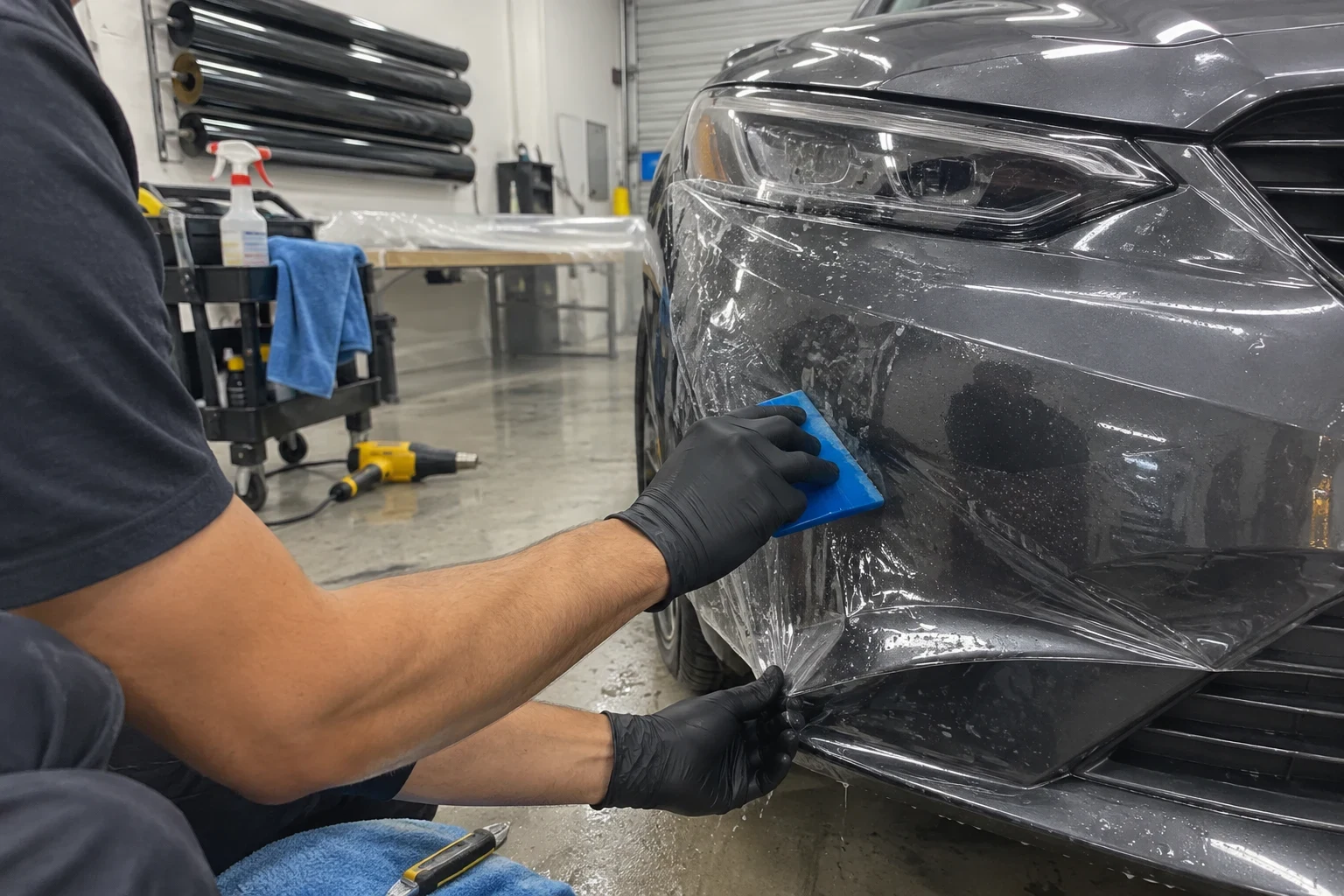
What are the downsides of using paint protection film?
The main downsides of paint protection film are the upfront cost, edges and seams you can see up close, possible edge lift, and the risk of pulling weak or repainted paint during removal. It also will not stop every rock chip. Most of these problems trace back to film quality, prep and install technique rather than the film itself.
What can go wrong with the film itself?
Modern paint protection film is a thermoplastic polyurethane (TPU) sheet with an acrylic adhesive on one side and a clear topcoat on the other. The topcoat is what lets light swirls level out with heat. When that topcoat is thin or cheap, the film can stain, dull or turn faintly yellow after a few seasons of sun, which shows most on white and silver cars.
Edge lift is the other common failure. Film is stretched to follow curves, and stretched film wants to pull back to its original shape. If an edge sits on a tight curve, was not wrapped far enough, or was installed over wax or road film, it can lift, collect dirt and leave a dark line along the panel.
- Yellowing or staining from a weak topcoat and long UV exposure
- Edge lift where the film was overstretched or the paint was not clean
- A faint orange peel texture on some films that differs from the factory clear
- Stretch marks or distortion on deep curves like mirror caps and bumper corners
Can people tell your car has paint protection film?
From a few feet away, a good install on clean paint is hard to spot. Up close, you can usually find something: the edge line on a hood where a partial kit stops, a seam where two pieces meet on a wide bumper, or a relief cut near a sensor or badge. Wrapped edges hide better than edges cut short of the panel, but not every edge can be wrapped.
In the first days after install, small cloudy patches or tiny water bubbles are normal. They are slip solution still drying out from under the film. Most clear on their own as the adhesive cures, faster in warm weather and slower in winter. Dust or a hair trapped under the film is different. That is an install flaw and it will not go away.
Can paint protection film damage your paint?
On healthy factory paint, film removed with heat and patience usually comes off clean, sometimes leaving adhesive residue that a proper remover takes off. The risk is on paint that never adhered well to the panel. A respray with poor prep, a panel with old clear coat failure or a chip that was touched up can lift with the film when it is pulled.
Film also seals in whatever is under it. If the paint has existing chips, swirl marks or embedded contamination, those stay visible beneath the film. That is why paint condition matters before an install, and why some cars need decontamination or a light polish first. Cutting film directly on the car with a blade is another way paint gets scored, so ask how the shop trims its kits.
- Repainted or touched-up panels carry the most removal risk
- Existing defects are preserved under the film, not fixed
- Blade cuts on the paint can leave permanent scratches
What paint protection film will not do
Film absorbs and spreads the energy of small gravel, the kind trucks kick up on Highway 50. A large rock at speed, a curb strike or a parking lot dent can still get through. Film reduces chips; it does not make a bumper armored.
It also costs more than wax, sealant or ceramic coating, because the material is expensive and a full front or full body install takes many hours of prep and fitting. Price moves with how much of the car you cover, how complex the panels are, the film line you choose and how much paint prep the car needs before the first piece goes on.
How we keep the downsides small
Most of the problems above show up weeks or months later, not on pickup day. So after an install we check back with you once the film has had time to cure, look for any lifted edge or leftover moisture, and fix what needs attention before it turns into a dirty line or a peeling corner.
We also walk you through care before you drive off. Keep a pressure washer nozzle back from the film edges, skip automatic brush washes, and wait the recommended time before the first wash so the adhesive can set. Plenty of owners pair film with ceramic coating on top, which makes the surface easier to rinse clean and helps keep staining off the topcoat.
- Wait before the first wash so the adhesive can fully set
- Hold pressure washer tips well away from edges
- Use a pH-neutral car shampoo, not harsh degreasers
- Tell us right away if an edge starts to lift
More questions about paint protection film
- Can I put ceramic coating over paint protection film?
- Yes. A coating applied over cured film adds slickness and makes bugs, road grime and water spots easier to wash off. We can do both and explain the order and timing when you call.
- Is partial front coverage worth it, or should I do the full front?
- Partial kits cost less but leave a visible edge across the hood and fenders. Full front coverage hides that line and protects the whole leading edge where most chips land.
- Does paint protection film work on matte paint?
- It can. Matte and satin film lines exist so the finish keeps its flat look, and using gloss film on matte paint would change how the car looks.
- Will film peel in summer heat?
- Heat itself rarely lifts a good install. Peeling usually starts at an overstretched edge or over paint that was not fully clean, which is what our follow-up check is meant to catch.
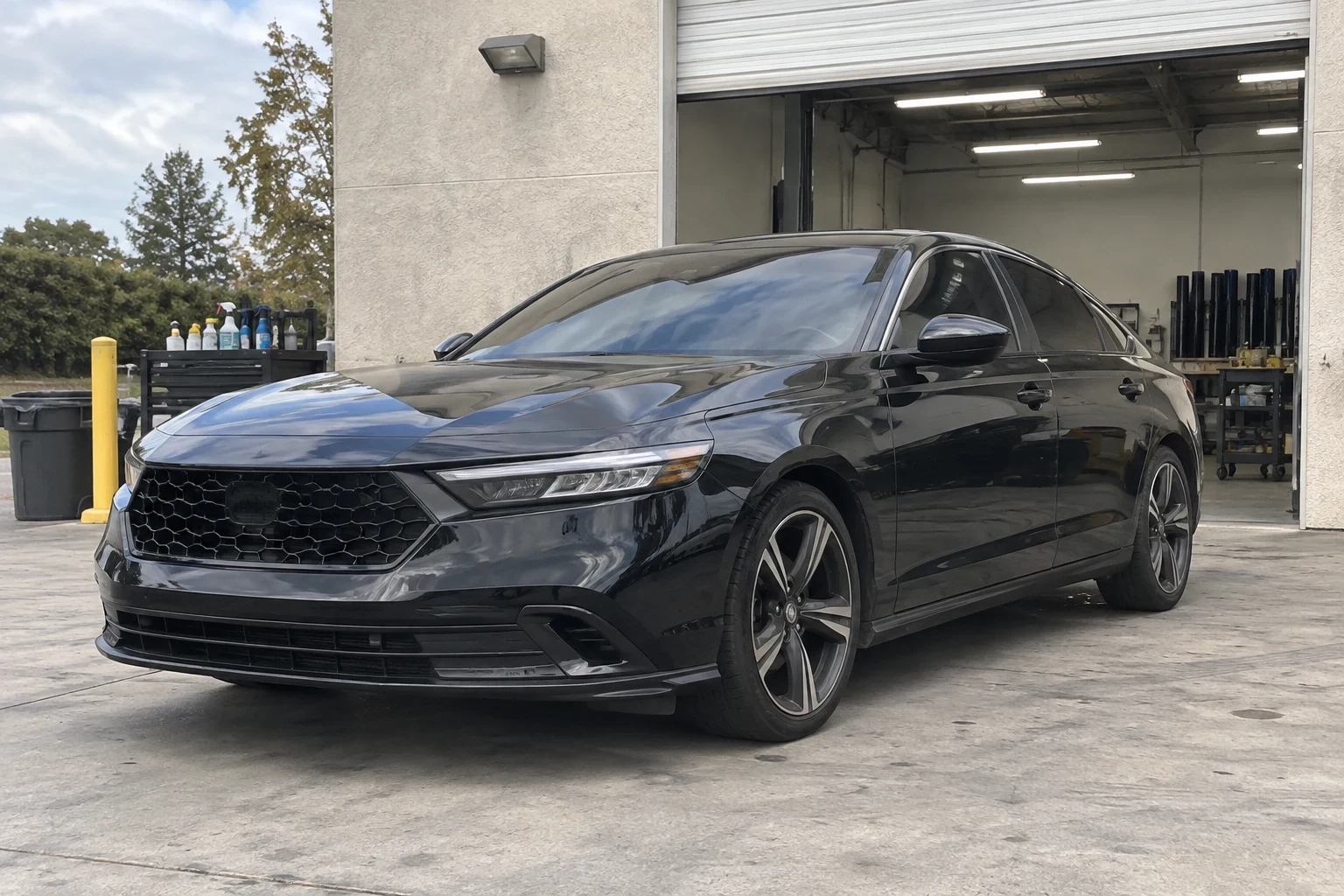
Talk through paint protection film before you commit
Call our shop and we will go over your car's paint, which panels make sense to cover, and the trade-offs that apply to your vehicle. You get a professional consultation and a quote by phone.