ServicesWindshield Protection Film
Windshield Protection Film in El Dorado Hills
Our shop applies a thin, optically clear film to the exterior of your windshield. It absorbs gravel strikes and road grit that would otherwise chip and pit the glass, with no shade added. Bring your car in, and we follow up after the film cures.
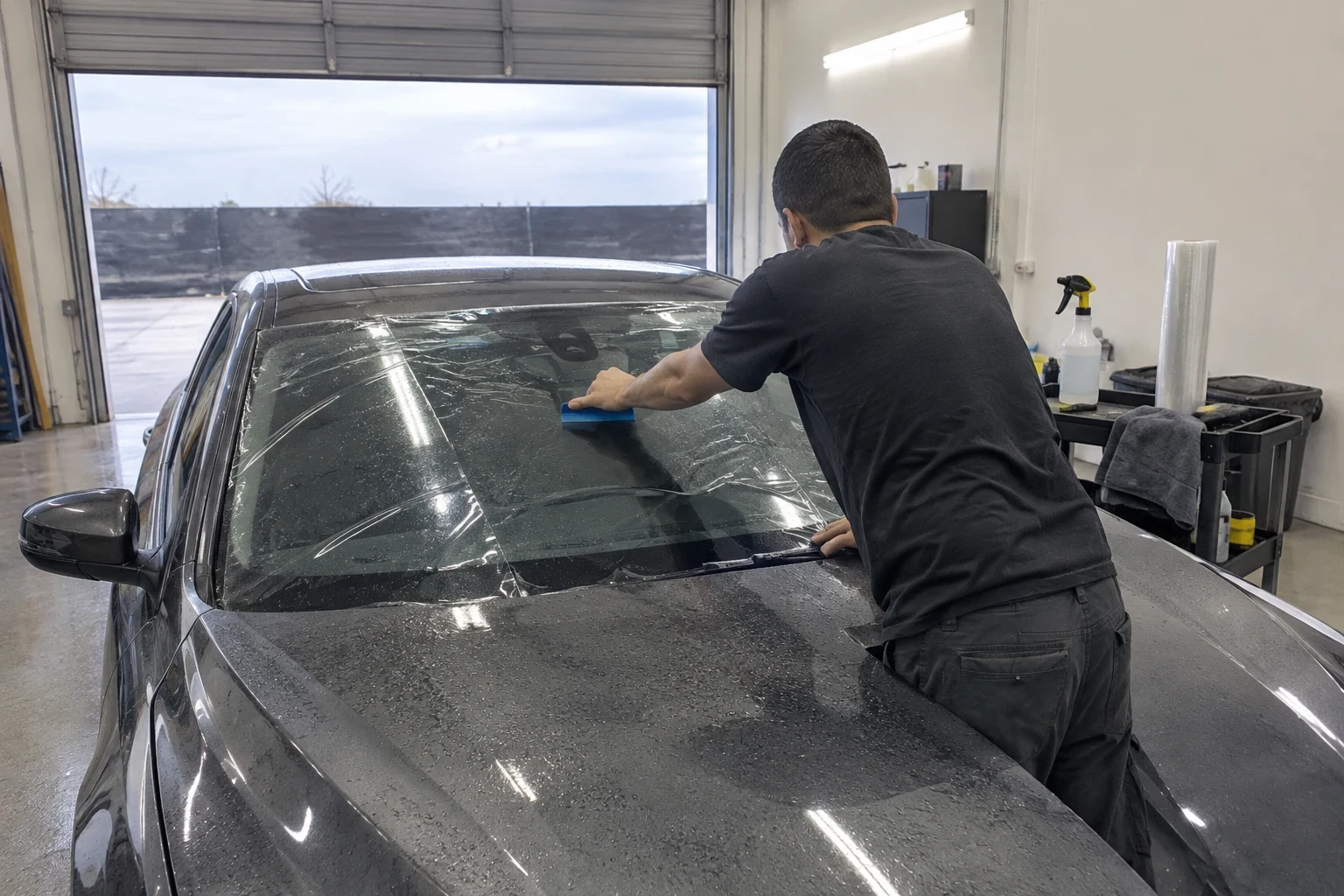
What windshield film does, and what it does not
Windshield protection film is a thin, optically clear layer, usually a multi-layer polyester or urethane construction, applied to the exterior face of the glass. When a pebble flung off a truck tire hits it, the film spreads and absorbs that point load instead of letting it concentrate on the glass. The result is far fewer star chips and bullseyes, and much less of the fine pitting that builds up over years and scatters headlight glare at night.
It is a sacrificial layer. When it wears or takes a hit, we replace the film, not the windshield. That matters more on newer vehicles, where a windshield may carry acoustic glass, a heating element, a rain sensor and the forward camera for lane keeping, and replacing it often means a camera recalibration too.
We will be straight with you about the limits. A large rock at highway speed can still crack glass through any film. What the film reliably stops is the steady stream of small strikes that cause most chips, which is why it makes sense for anyone who drives US-50 every day.
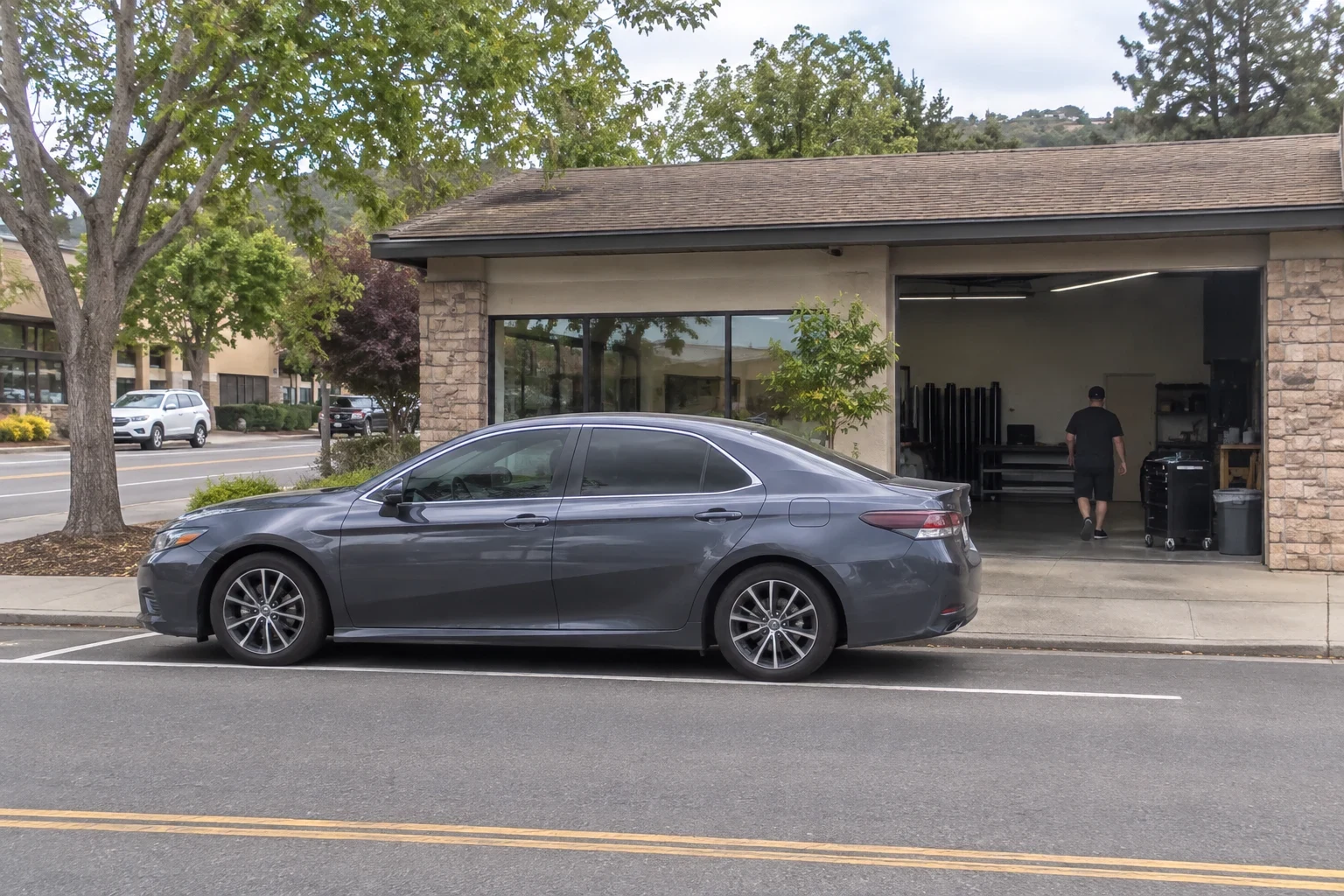
What the install includes
- 01
Glass inspection
We look over the windshield under shop lighting and point out any existing chips, pits or wiper haze. Open chips should be repaired before film goes on, because film sealed over a fresh chip can trap moisture and let it spread.
- 02
Full decontamination
The glass is washed, clayed and wiped down to lift stuck-on grit, bug residue and old wax. Any particle left under the film shows as a permanent speck, so this step takes longer than people expect.
- 03
Heat-formed fit
Windshields curve in two directions. We shrink the film to the glass contour with controlled heat before final placement, so it lies flat without fingers or creases at the corners.
- 04
Sensor and camera clearance
We check the area in front of the rain sensor and the forward camera so the film sits evenly and optically clear across it. The film adds no tint or mirror effect to the glass.
- 05
Edge finishing
Edges are trimmed and sealed just inside the glass perimeter, clear of the cowl and moldings, so wipers and pressure washers have less to catch.
- 06
Follow-up and care
We check back with you after the install to confirm the film has cured clean, and we walk you through wiper, washing and scraping habits that keep it clear longer.
Questions about Windshield Protection Film?
Call(916) 884-6897Signs windshield film is worth it for your car
You have already replaced a windshield
If one rock already cost you a windshield, the next commute brings the same gravel. Film on the new glass protects what you just paid for.
Headlights flare at night
A sandblasted windshield scatters oncoming light into a haze. Film will not fix existing pitting, but it keeps new glass from getting there.
Your windshield carries cameras and sensors
Driver-assist cameras behind the glass make replacement more involved. Keeping the original windshield intact avoids that work entirely.
You follow trucks or ride on new chip seal
Gravel haulers, construction zones and freshly sealed roads throw a lot of loose stone. Daily exposure is exactly where film earns its place.
You drive a new or collector car
Original factory glass on a newer or special vehicle is worth keeping. Pairing film with paint protection film on the hood and bumper covers the surfaces rocks hit first.
How your appointment runs at our shop
- 1
A phone consultation first
We ask about the vehicle, what sits behind the glass and the roads you drive most. Then we explain the film choices and how the job goes, so nothing about the day surprises you.
- 2
Car arrives, glass gets prepped
Once the car is at our shop, we inspect the windshield and clean it down to bare glass. The cowl and dash vents get masked so slip solution does not run where it should not.
- 3
Forming, applying, checking
Our lead installer heat-forms the film to the windshield's curve, lays it on the glass and squeegees the slip solution out, then inspects it under shop lighting. For the first several days you may notice faint haze or tiny water spots under the film. They clear on their own as the leftover solution evaporates and the adhesive finishes bonding.
- 4
Pickup, then we check in
When you collect the car, we explain care, including how long to keep wipers off dry glass. After the cure period we get back in touch, and if an edge has lifted or something looks wrong, bring the car back so we can take a look.
What sets the price for windshield film
No two windshields share the same dimensions or curve, so we quote each vehicle on its own. Once we know the make, model and what is mounted behind the glass, you get your quote by phone. These factors account for most of the difference from one car to the next.
- Glass size and rake
- A tall pickup windshield or a sharply sloped sports car windshield uses more film and needs more heat-forming time than a small, upright one.
- Film thickness and layers
- Heavier multi-layer films soak up more impact and usually hold up longer under wiper blades. We lay out the differences so your choice matches the miles you drive.
- Sensor clusters and old film
- Fitting film cleanly around a camera and rain sensor housing takes extra time. Stripping a worn earlier film and its leftover adhesive adds more.
- Chips that need repair first
- Open chips must be repaired before film goes on. That repair is its own step, separate from the film install.
Windshield protection film questions
Will the film make my windshield darker or illegal?
No. The film is optically clear and adds no shade, so it does not count as tint. If you want heat rejection on the side glass too, that is a separate window tint job, and we can cover it in the same consultation.
How long does it last?
Wiper contact does most of the wearing, so lifespan depends on how much rain you drive in and whether the wipers ever run on dry glass. Once the film looks worn or takes a hard strike, we peel it off and fit a fresh piece. The windshield underneath is still the original.
Can I use my wipers and washer fluid normally?
Yes, once the adhesive has cured. We give you the waiting period at pickup. After that, spray washer fluid before the blades move, swap out worn blades, and use the defroster or a plastic scraper on frosty mornings instead of anything metal.
Does it work with my lane camera and rain sensor?
On most vehicles it does. We look over the camera and sensor area before the install, and the film stays optically clear in front of them. If your car needs anything special, we tell you during the consultation.
Will it stop every crack?
No film can promise that. It handles the small, frequent strikes behind most chips and pitting very well, but a big rock at highway speed can still break glass. We would rather you hear that before the install than after.
How experienced is your shop with this work?
Our shop has been open for 6 years. Every windshield is formed and applied by our lead installer, who brings 15 years of experience to the job, so the person handling your glass has fitted film on a wide range of curves and sensor layouts.
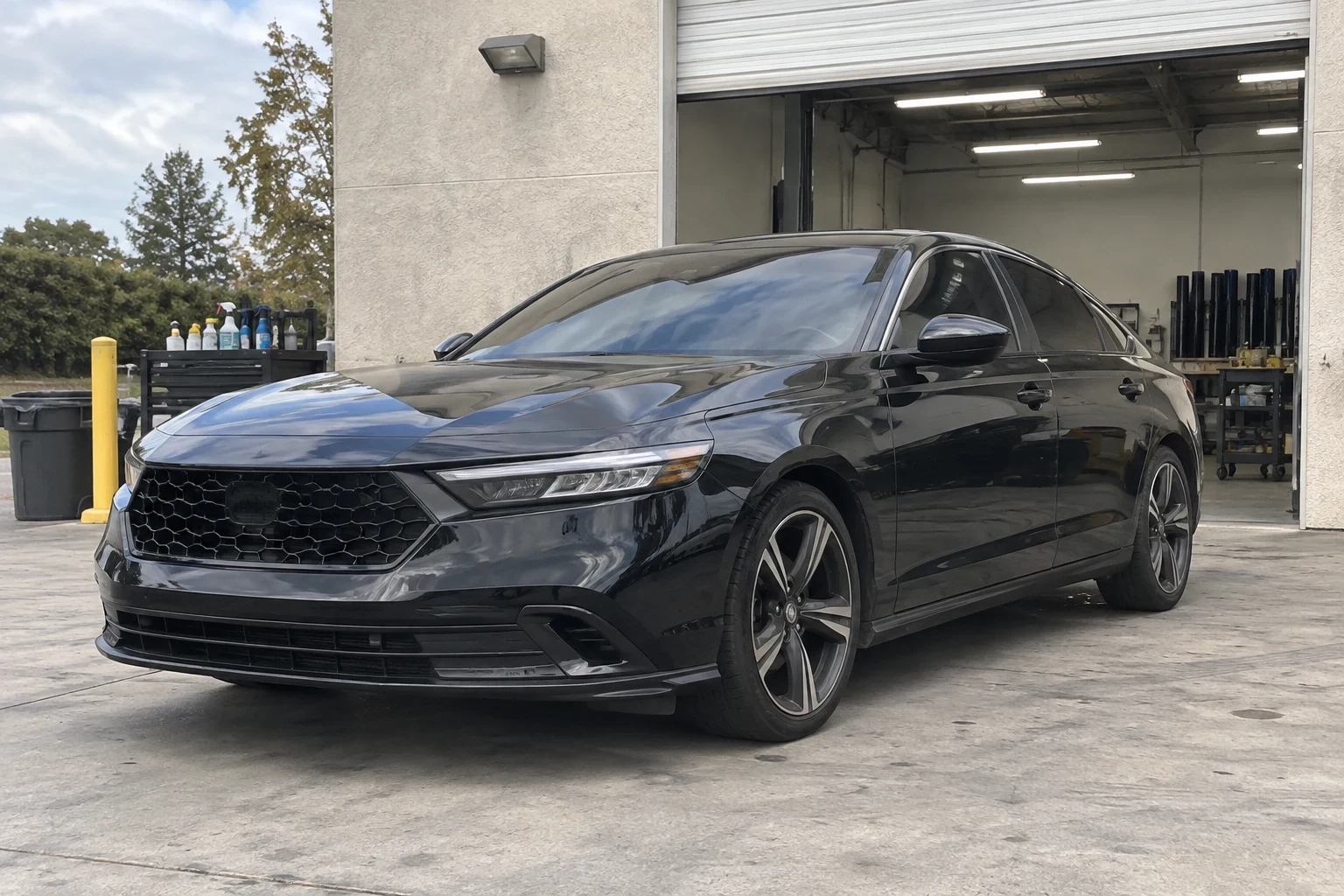
Keep the original glass on your car
Tell us your vehicle and how you drive, and we will explain which film fits and what the install involves. After the job, we check back to make sure it cured clean.