Window Tint and Paint Protection for El Dorado Hills Drivers
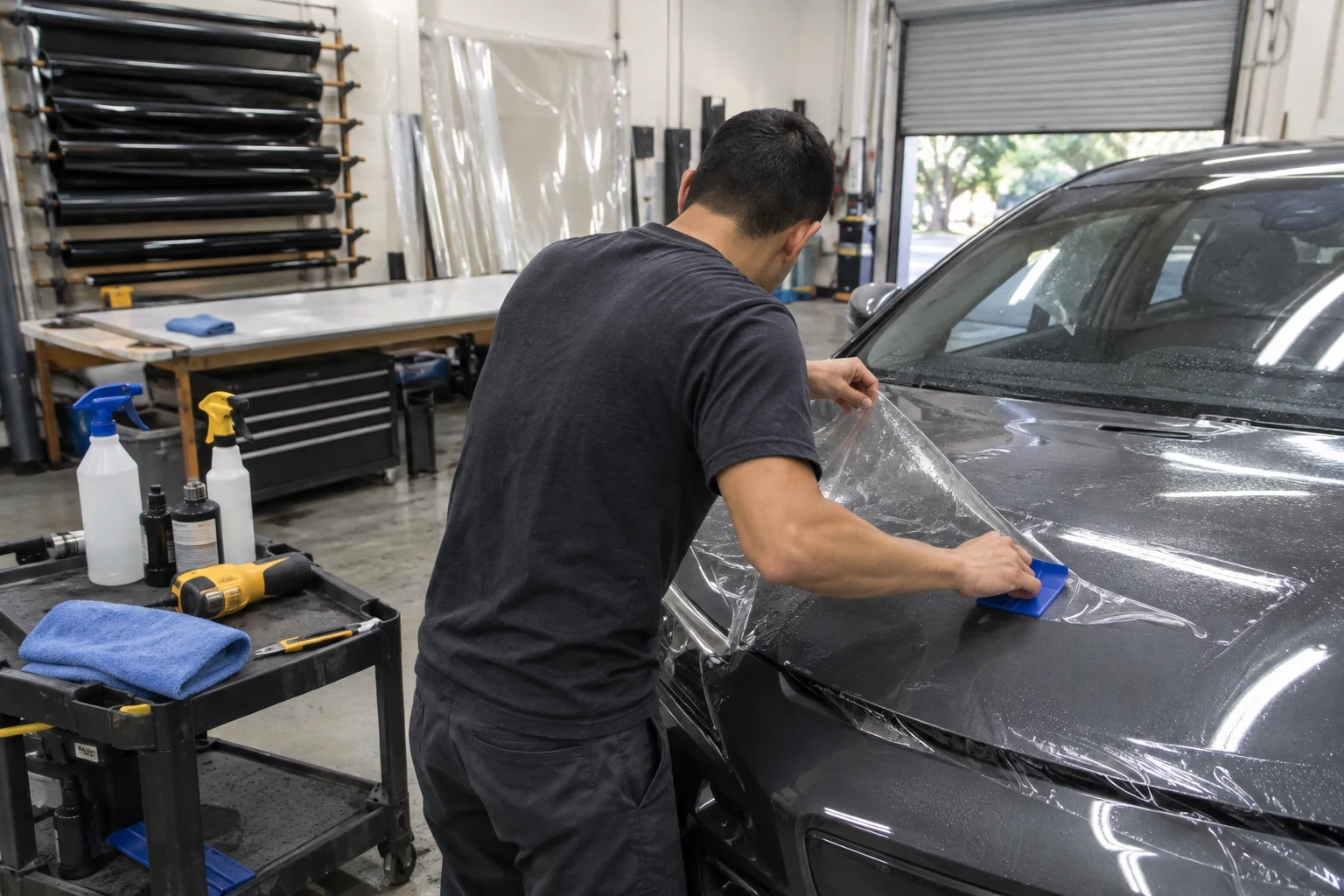
You bring your car to our shop, and we install window tint, paint protection film, ceramic coating or windshield protection film with the right material for how you drive. After the job, we check back and walk you through care so the work holds up.
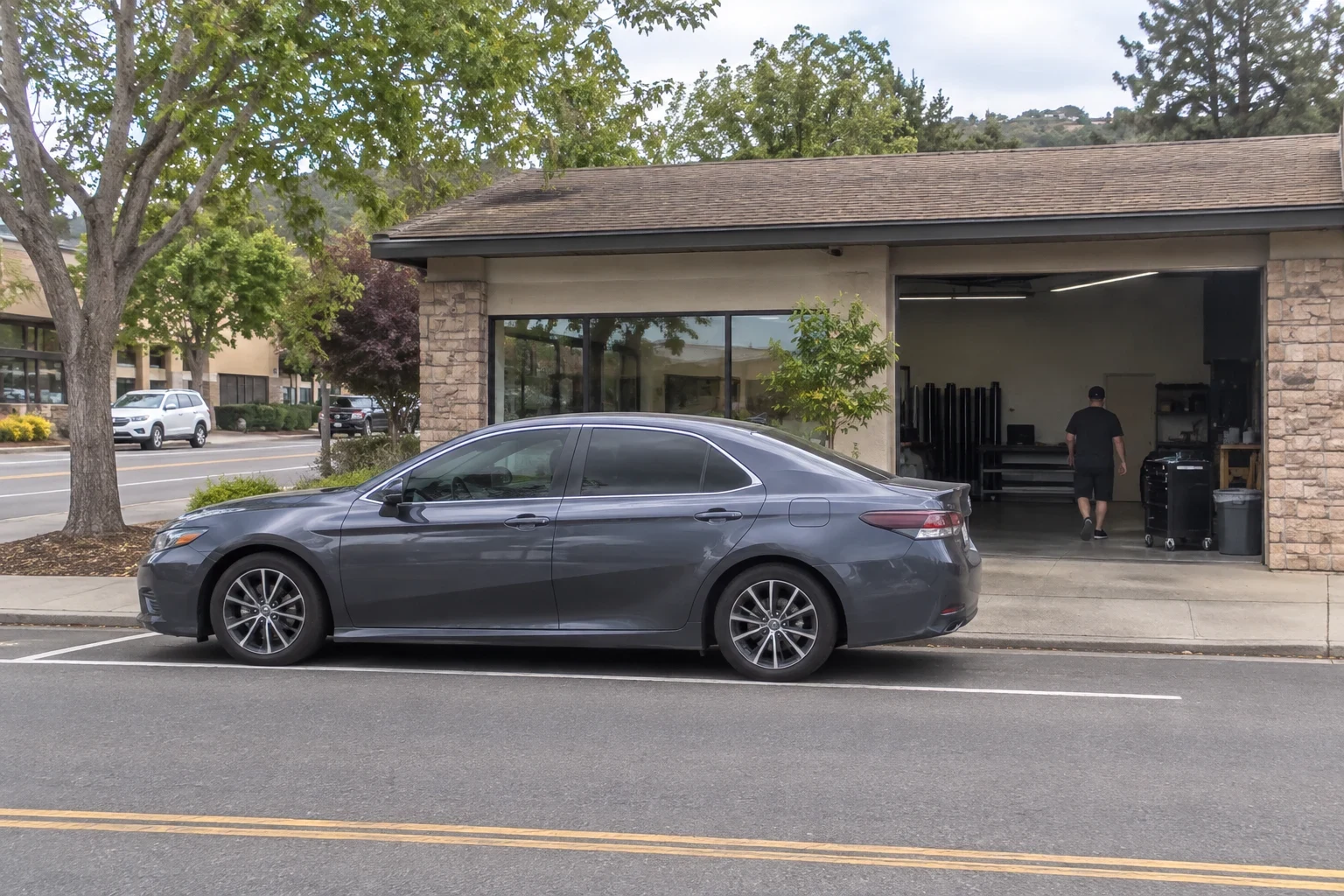
Drivers We See at Our Shop
All work happens in our shop, so the vehicle comes to us. That lets us control dust, temperature and lighting during an install, which matters because film edges and coating layers cure best in a clean, stable space. Most of our customers drive in from El Dorado Hills, Folsom, Cameron Park and Shingle Springs, with others coming from Granite Bay, Orangevale, Fair Oaks and Citrus Heights.
We also see cars from Rancho Cordova, Gold River and Diamond Springs. Distance changes one thing: how you plan pickup. Window tint needs a few days before you roll the glass down, and a fresh ceramic coating should stay dry for its first day, so we go over timing on the phone. A few days after pickup we follow up to ask how the film is drying and answer care questions, wherever you live.
Towns we cover from El Dorado Hills
- El Dorado Hills
- Folsom
- Cameron Park
- Orangevale
- Granite Bay
- Shingle Springs
- Citrus Heights
- Rancho Cordova
- Fair Oaks
- Diamond Springs
- Gold River
Not on the list? Call (916) 884-6897 and ask.
What Shapes the Work Across the Region
Summer heat and sun
Long, dry summers with strong sun load the cabin with infrared heat and fade dashboards and seat leather through UV exposure. That is why we talk through ceramic window film for heat rejection, not just darkness. A lighter ceramic film can block more heat than a dark dyed film because it targets infrared, and both block nearly all UV.
Highway grit and rock chips
Freeway commutes and foothill roads throw sand and small stones at the front bumper, hood leading edge, mirrors and windshield. Paint protection film absorbs those impacts in a urethane layer instead of letting them chip the clear coat. Windshield protection film does a similar job on the glass, taking pitting that would otherwise reach the windshield itself.
Dust, pollen and hard water
Dry months leave a fine dust film on paint, spring brings pollen, and sprinkler or well water can spot a car with minerals. A ceramic coating gives the paint a slick, hydrophobic surface so these contaminants rinse off with less scrubbing. We show you how to wash a coated car so you do not strip it with harsh soaps.
California tint rules
California sets a minimum light transmission for the driver and front passenger door glass, roughly 70 percent, and only allows film on the windshield as a narrow band across its top edge. Behind the front seats, the back doors and rear window can run darker, provided the car has a working mirror on each side. Before we install anything, we show you which film is legal on each piece of glass, so a traffic stop or inspection brings no surprises.
Plan Your Visit to Our Shop
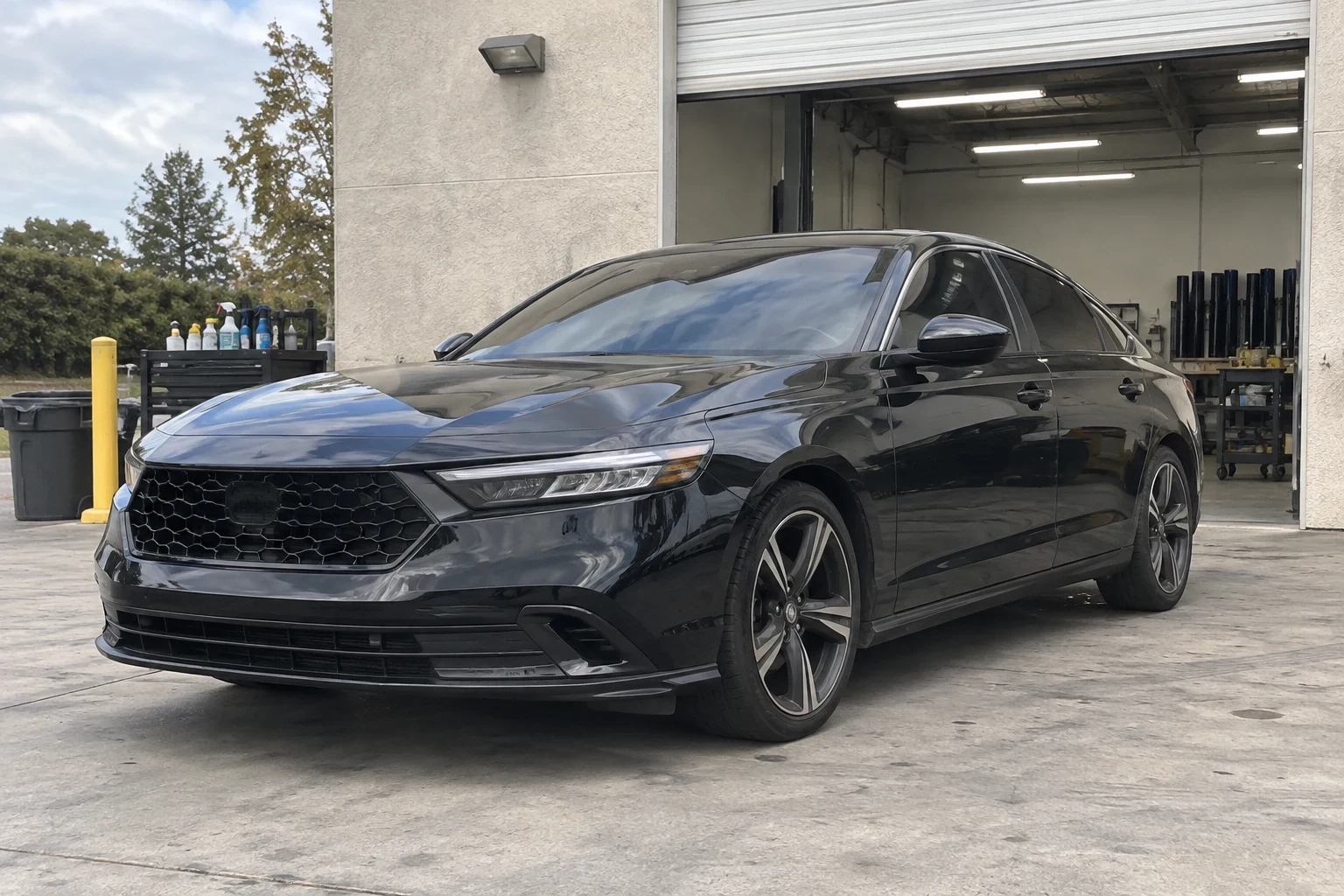
Tell us your vehicle, how you drive and what you want protected. We will recommend the right film or coating, explain drying and care time, and set a drop-off that fits your trip in.