ServicesWindow Tint
Car Window Tint in El Dorado Hills
We install ceramic and carbon window tint at our shop, matched to California's shade rules and to how you use your car. You get a cooler cabin, UV protection for your skin and interior, and a check-in from us after the film cures so small issues get handled early.
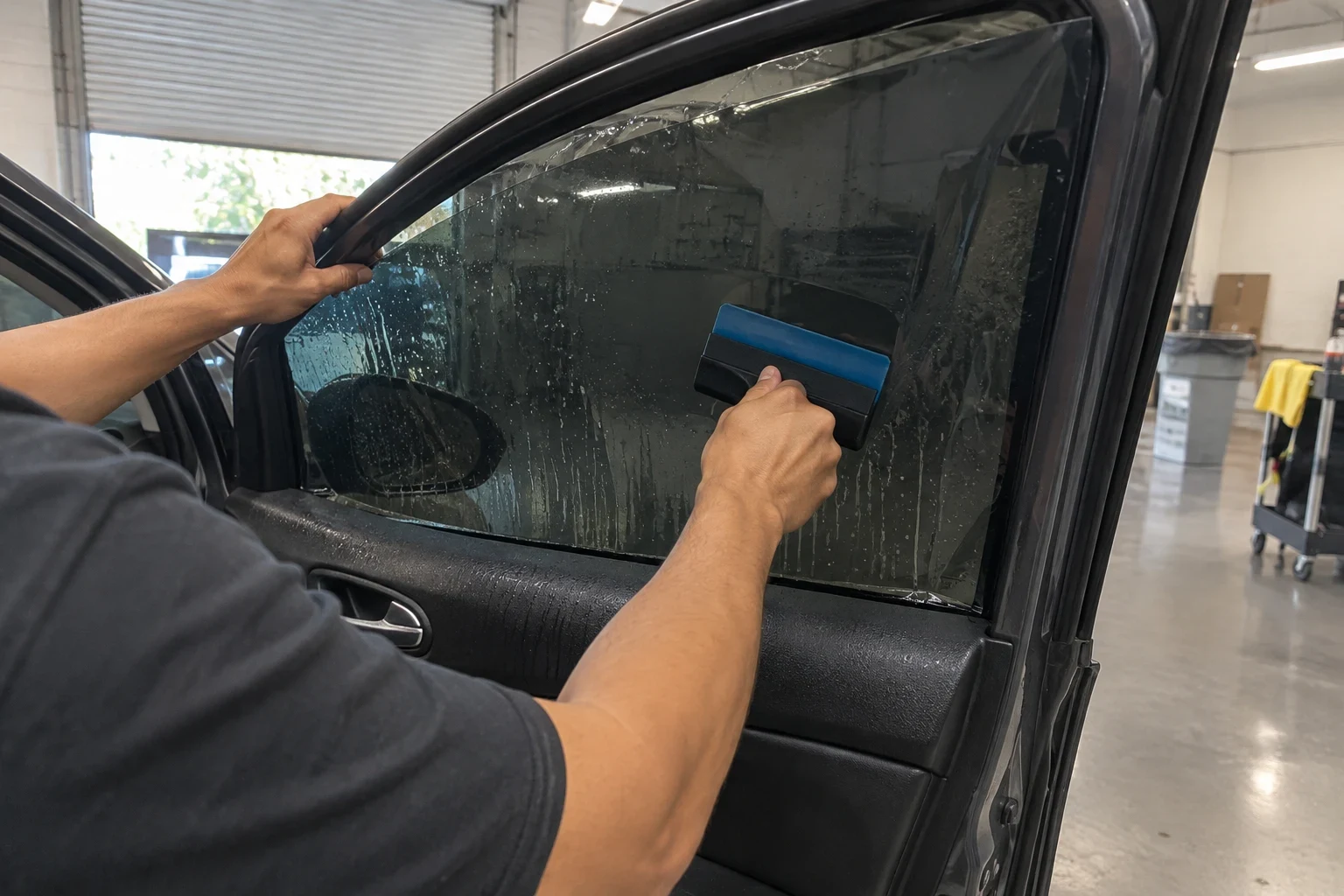
What Window Tint Does and When It Makes Sense
Window tint is a thin polyester film installed on the inside surface of your car's glass. What sits inside that film determines how it performs. Dyed films mainly darken the view. Carbon films reject more heat and resist fading. Nano-ceramic films stop a large portion of infrared heat with no metal content, so your phone, GPS and keyless entry keep working normally.
Tint pays off when the cabin heats up quickly, when the dash or leather is showing fade, or when glare makes the daily drive tiring. Foothill summers often push past 100 degrees, so the drop in cabin heat is usually the first thing drivers feel.
Our shop has six years behind it, and the installer who leads our tint work brings 15 years of hands-on experience, from flat sedan door glass to sharply curved hatch windows. After the install we explain how to look after the film, and we reach out again once it has cured.
What Our Window Tint Install Includes
- A plain comparison of films
- We explain how carbon and ceramic film differ in heat rejection, optical clarity and price. You choose the film and shade, and if a less expensive film covers what you need, we say so.
- Shades planned to California law
- Up front, the door glass has to pass at least 70 percent of visible light. The windshield is limited to a non-reflective band across its top 4 inches, while the rear doors and back glass may go darker. We map every window to those limits so the tint does not earn you a ticket.
- Careful glass prep
- Each window gets cleaned and scraped of stuck-on grime, and we work the edges where the glass meets the rubber seals. Grit left in those seals is the usual source of the tiny specks found in rushed installs.
- Film cut to each window
- Every piece is patterned to the exact outline of its glass. On curved back windows we shrink the film with heat first so it lies down smoothly rather than lifting in ridges along the edge.
- Removing failed tint
- Purple or blistered film comes off with steam and slow peeling. We then clear the leftover glue without running a blade across the rear defroster grid.
- Care guidance and a check-in
- At pickup we cover curing time, cleaning and what looks normal during the first week. Once the film has had time to cure, we contact you to make sure it settled correctly.
Signs Your Car Is Ready for Window Tint
Heat builds up fast in the cabin
When the wheel is too hot to touch and the AC struggles for ten minutes to cool things down, infrared heat is pouring through the glass. Ceramic film blocks a large share of it.
The interior is fading
UV exposure dries out dash plastic, leather and seat fabric until colors fade and surfaces crack. A quality film stops about 99 percent of UV.
Old tint is purple or blistered
Low-grade dyed film breaks down with age. The dye shifts toward purple and the glue releases, leaving bubbles and hazy patches.
Factory privacy glass still gets hot
Many SUVs come with dark rear glass colored in the glass itself. It hides the cargo area but stops little heat, so a clear or light ceramic film on top still helps noticeably.
Glare is tiring you out
Low morning and evening sun, plus headlights behind you at night, are easier to handle with the right shade on the side and rear glass.
What Sets the Price of a Window Tint Job
Two things drive most of the number: which film goes on and how many square feet of glass it covers. On the phone we ask about your exact car so the quote matches the real job. Anything that changes the price gets discussed before we start, not at pickup.
Carbon or nano-ceramic film
Ceramic film carries a higher material cost because of the infrared-blocking ceramic particles in its layers. Carbon film costs less and still beats dyed film on heat and fade resistance.
Number and size of windows
Two doors and a back glass on a coupe take far less film and time than a three-row SUV with quarter windows, a rear hatch and a sunroof panel.
Curvature of the back glass
A deeply curved or oversized rear window needs extra film and more time with the heat gun before the film sits flat against the glass.
Stripping old film
Taking off faded film and the glue it leaves behind is slow work. The rear window needs the most care so the defroster grid stays intact, and that time shows up as added labor.
How a Window Tint Appointment Runs
- 1
Start with a phone consultation
Give us the year, make and model, the glass you would like covered and what you care about most: heat, glare or privacy. When we hang up, you will know which films fit and roughly how long we will need the car.
- 2
Drop-off and window prep
Bring the vehicle to our shop at your scheduled time. We shield door panels and window switches from the slip solution, then clean and prep each piece of glass.
- 3
Film install
Film goes onto a wet slip solution and is squeegeed from the center out, pushing water and air past the edges. The back glass film is heat-shrunk to shape before it is applied. Most cars take a few hours, longer if old film has to come off first.
- 4
Final check and pickup
We go over every edge and the defroster line area under bright light. At pickup we walk you through curing and cleaning so nothing in the first week catches you off guard.
- 5
Follow-up once cured
Once the film has had time to dry, we reach out. If an edge has lifted or a spot has not cleared, bring the car back in and we will look it over.
Window Tint Questions
How dark can I legally go in California?
California requires the front door glass to let at least 70 percent of visible light through, which is why most drivers pick a clear or very light ceramic film up front purely for heat rejection. The windshield can carry nothing more than a non-reflective strip limited to its uppermost 4 inches. Behind the driver, the rear door glass and back window may be darker as long as the car has side mirrors on both sides. We agree on the shade for each window with you before we cut any film.
How long before I can roll my windows down?
Keep them closed for about three to five days. In that window the remaining slip solution evaporates from behind the film and the adhesive bonds to the glass at the edges. Cool or damp weather can add a day or two.
The film looks hazy and has small water spots. Is that normal?
Yes. Trapped moisture is still working its way out through the film for the first few days, sometimes up to a couple of weeks, and that is what shows up as haze and spotting. It clears as the film dries. If anything remains after curing, point it out when we check in and we will inspect it.
How should I clean tinted windows?
Use an ammonia-free glass cleaner with a soft microfiber cloth. Ammonia breaks down window film over time, and paper towels or razor blades can scratch its surface. Keep seatbelt buckles and rings from catching the film edges.
Will ceramic tint interfere with my phone or GPS?
No. Ceramic film contains no metal, so phone signal, GPS, radio and toll tags work as usual. Signal problems come from metallized films, and that is the reason we steer people away from them.
Should I tint over factory privacy glass?
Often, yes. Factory privacy glass is tinted by pigment inside the glass and blocks little infrared heat. A light ceramic film applied over it adds real heat rejection while hardly changing how dark the rear windows appear.
Ready for a Cooler, Better-Protected Car
Tell us your vehicle and which windows you want covered, and we will talk through films and shades with you. After the install, we check back once the film has cured.